NAZA
Dirs: Yuval Abraham & Rachel Szor, 2026, UK, 1h 20min Cert: 18 TBC
-
Tue 3 November // 20:00
Tickets: £5
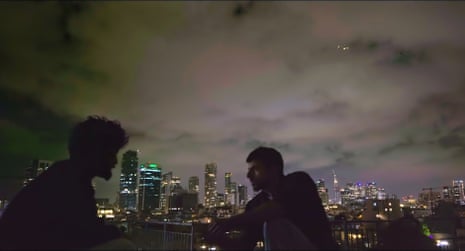
Shot at night on the rooftops of Tel Aviv, NAZA reveals in detail the systems behind Israel’s calculated mass killing of Palestinian civilians in Gaza, by the people who designed and operated them.
Winner of the Special Jury Prize at the Venice International Film Festival and directed by Yuval Abraham and Rachel Szor, two of the Oscar-winning directors of No Other Land, NAZA asks: how does one group of people allow the total dehumanisation of another
***** 'As a work of cinema, it is exemplary. As a work of journalism, it is inarguable. As a document, it is an indictment.' - Time Out
“A brave and indispensable movie” - Jordan Mintzer, The Hollywood Reporter
“Essential…it will shake you to your core”- Siddhant Adlakha, IndieWire
“One of the most important films of our time” - Bilge Ebiri, New York Magazine
“An essential, devastating documentary…there’s no turning away from what’s said, you simply can’t unknow what you have heard” - Nicolas Rapold, Sight and Sound
“NAZA might be the best present-tense documentary of its time since Citizenfour” - Marshall Shaffer, The Playlist
Director's Statement
We made this film out of a sense of obligation to use our position as Israelis to examine the systems behind the mass killing of Palestinian civilians for which our country is responsible.
While filming over the past three years, we found ourselves asking the very questions that were asked by our grandparents’ generation and throughout the 20th century: how does one group of people allow the total dehumanisation of another? What do the inner workings of such a system look like?
Many of the revelations in the film were published almost immediately as we learned of them, in the months following the October 7th attacks, by The Guardian (one of NAZA's producers), in collaboration with reporting partners +972 Magazine and Local Call.
The film lets us explore something deeper than we could in our investigative journalism alone: not only the words being said but also those that are not said, the silence. It is up to all of us to break that silence.